Backpacking the Four Pass Loop: Our 3-Day Adventure Through Colorado’s Most Scenic Trail
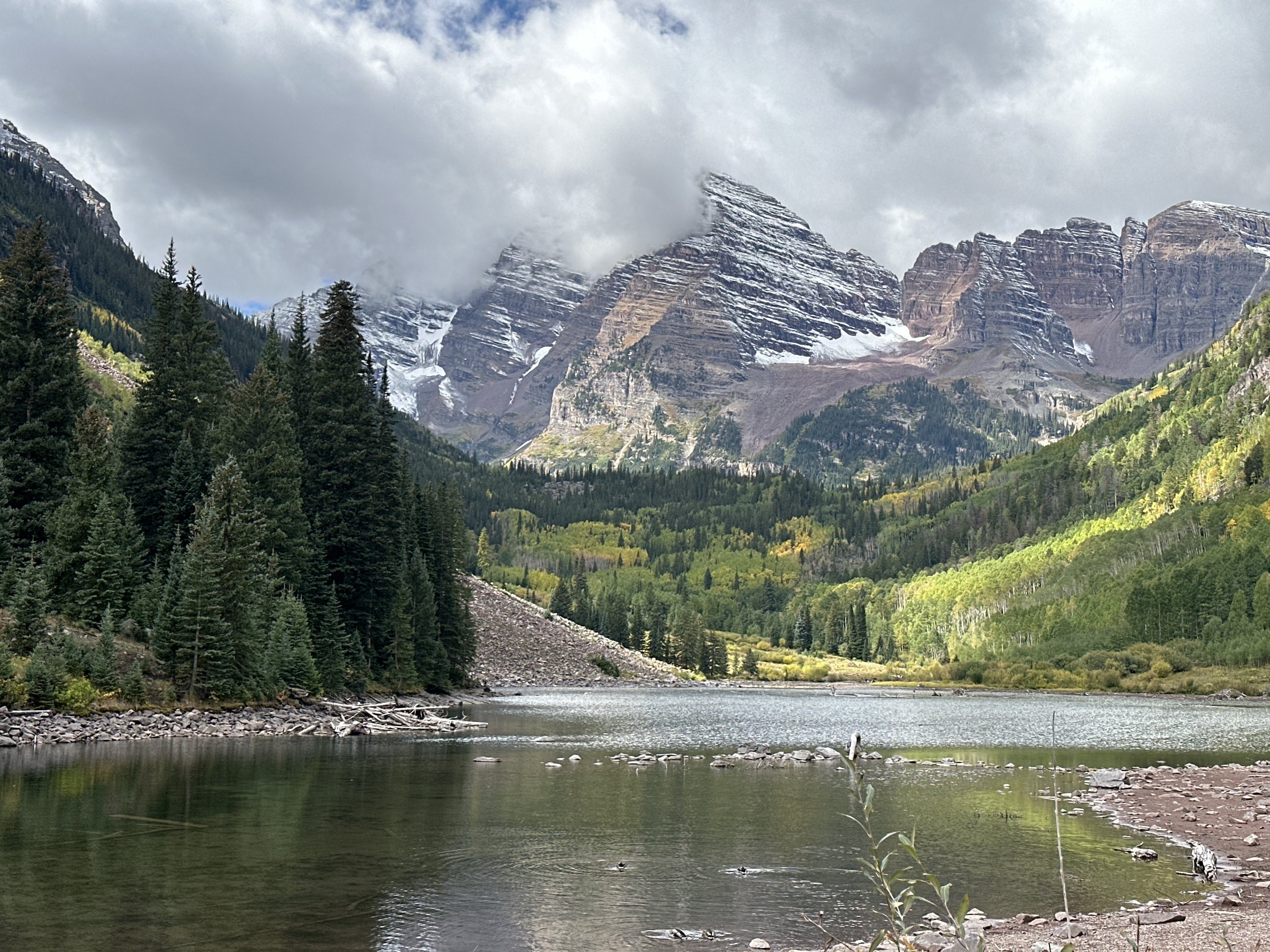
The Maroon Bells
Dates: September 14–16, 2025
Distance: ~27 miles
Elevation Gain: ~8,000 feet
Direction: Clockwise
A Trip We’ll Never Forget
Some trails leave you speechless — and the Four Pass Loop in the Maroon Bells–Snowmass Wilderness is one of them.
Over three days in mid-September, Anna and I backpacked through towering peaks, alpine lakes, golden aspens, and high mountain passes — all while testing our limits. It was one of the most beautiful, demanding, and rewarding adventures we’ve ever done.
This is our story from the trail: three days of hard climbs, cold mornings, muddy shoes, and nonstop “wow” moments.
Before the Trail: A Night in Leadville
We kicked off the trip with a night in Leadville, Colorado — the highest incorporated town in the U.S. at 10,152 feet. It’s the perfect place to acclimate and grab a last hearty meal before heading into the wilderness.
We stopped by the Silver Dollar Saloon, a historic watering hole with old mining-town character, for burgers, beers, and a last dose of civilization before three days in the backcountry. Over dinner, we reviewed our itinerary, checked our permits, and tried not to think too hard about the climbs ahead.
That night, we car-camped under drizzly, chilly skies. When the sun rose we could see the clouds had dropped some early snow on the surrounding mountains — a preview of the adventure to come.
Trail Overview
For anyone unfamiliar, the Four Pass Loop is a roughly 27-mile circuit that connects four mountain passes — West Maroon, Frigid Air, Trail Rider, and Buckskin — each topping out over 12,000 feet.
The route loops through wildflower meadows, high-alpine basins, and crystal-clear lakes, all framed by Colorado’s iconic red rock peaks. It’s a bucket-list trail for good reason.
We hiked clockwise, starting from the Maroon Lake Scenic Trailhead near Aspen, and tackled the route over three days and two nights.
Day 1: Maroon Lake to Below West Maroon Pass (5.5 miles, 2,400 ft gain)
We caught a late-morning shuttle from the Maroon Bells Visitor Center, arriving at Maroon Lake just before noon. The reflection of the Bells on the still water was surreal — it’s the kind of view that makes you stop mid-sentence and just take it all in.
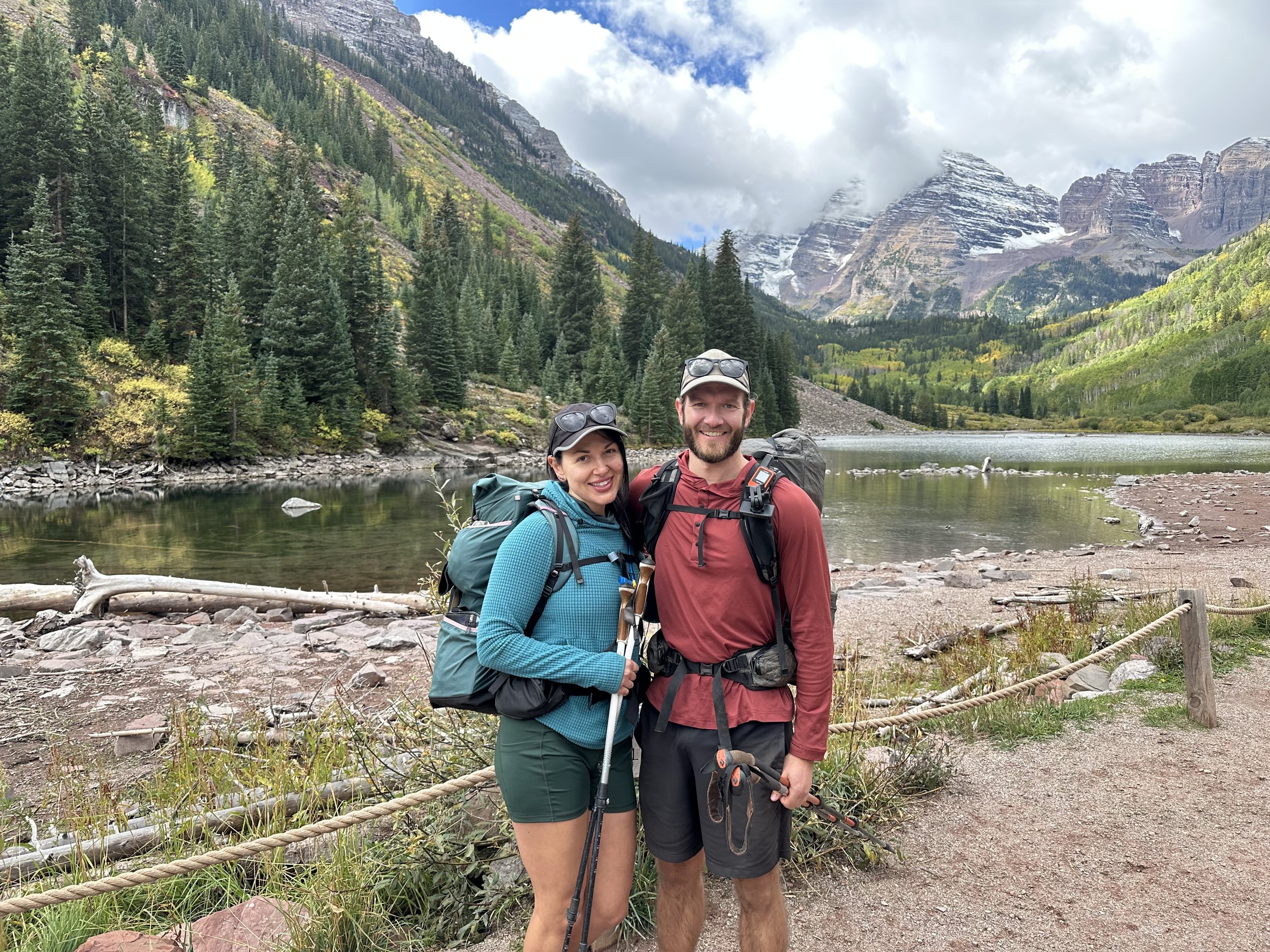
Here we are in front of the Maroon Bells
The first section up to Crater Lake (about 1.7 miles in) was busy — this part of the trail is extremely popular with day hikers — but once we passed it, the crowds thinned out, and the true backcountry experience began.
We passed through rocky slopes and golden aspens, spotting a moose along the way (our sixth in Colorado this summer). By mid-afternoon, we found a campsite just below West Maroon Pass, perched around 11,300 feet.
Dinner was simple but satisfying — instant rice and beans mixed with taco meat and a handful of Fritos (Skurka Rice ‘N’ Beans). It might not sound glamorous, but after 2,400 feet of climbing, it hit the spot.
As night fell, the temperature dropped into the 20s. We drifted in and out of sleep, knowing the hardest days were still ahead. Sleep was unfortunately hard to come by.
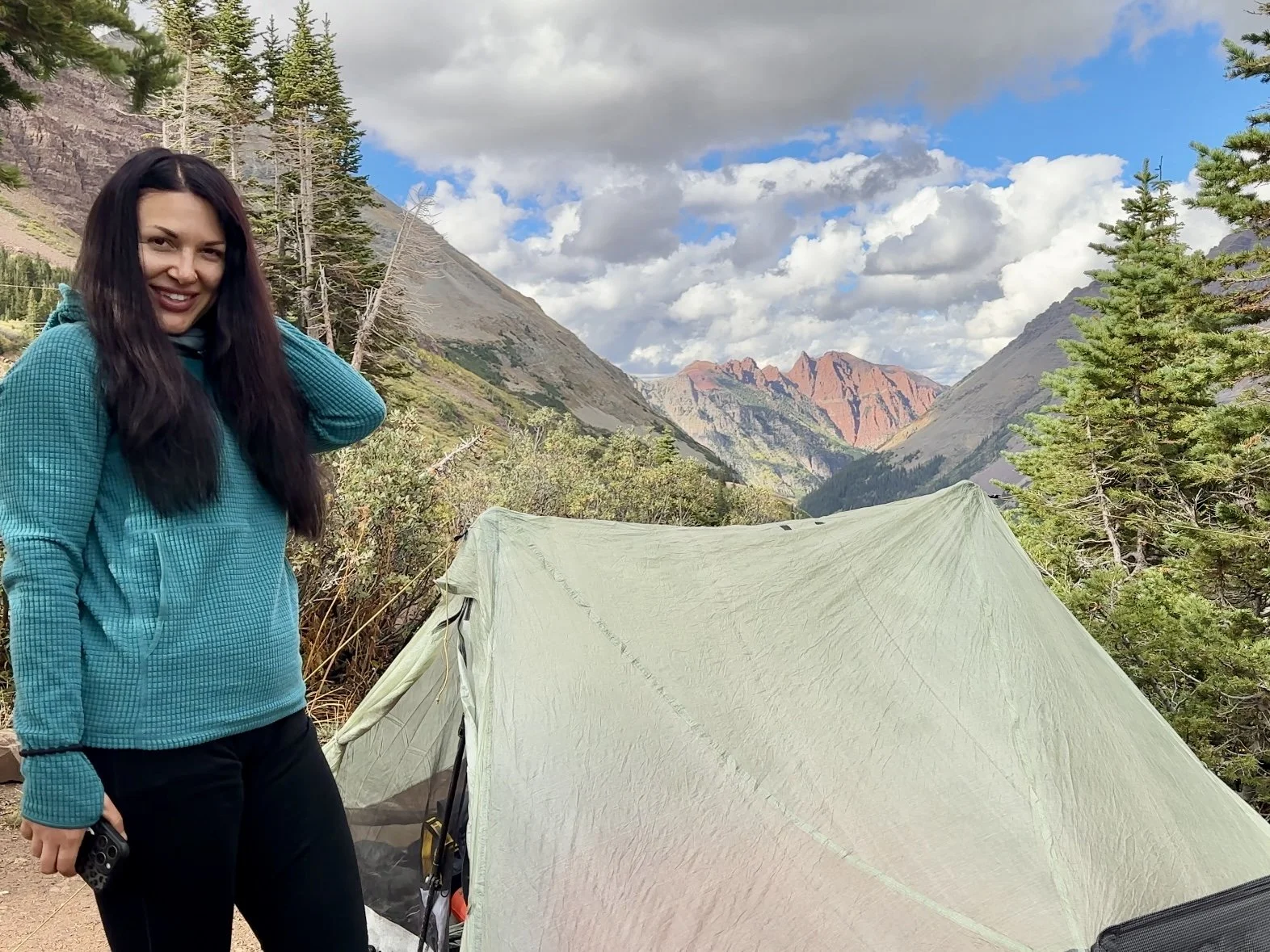
At camp on night one
Day 2: Three Pass Day – West Maroon, Frigid Air & Trail Rider (14.5 miles)
Morning arrived crisp and clear — 27 degrees and still air. Condensation inside the tent had turned to frost. After some strong cups of instant coffee and a quick breakfast, we were on our way.
Our first goal: West Maroon Pass (12,480 ft). Our first pass of the journey. The climb was steep and muddy, but cresting the top revealed a breathtaking view of the vast landscape behind us and endless peaks ahead. The wind, and chill that came with it, encouraged us to begin our descent.
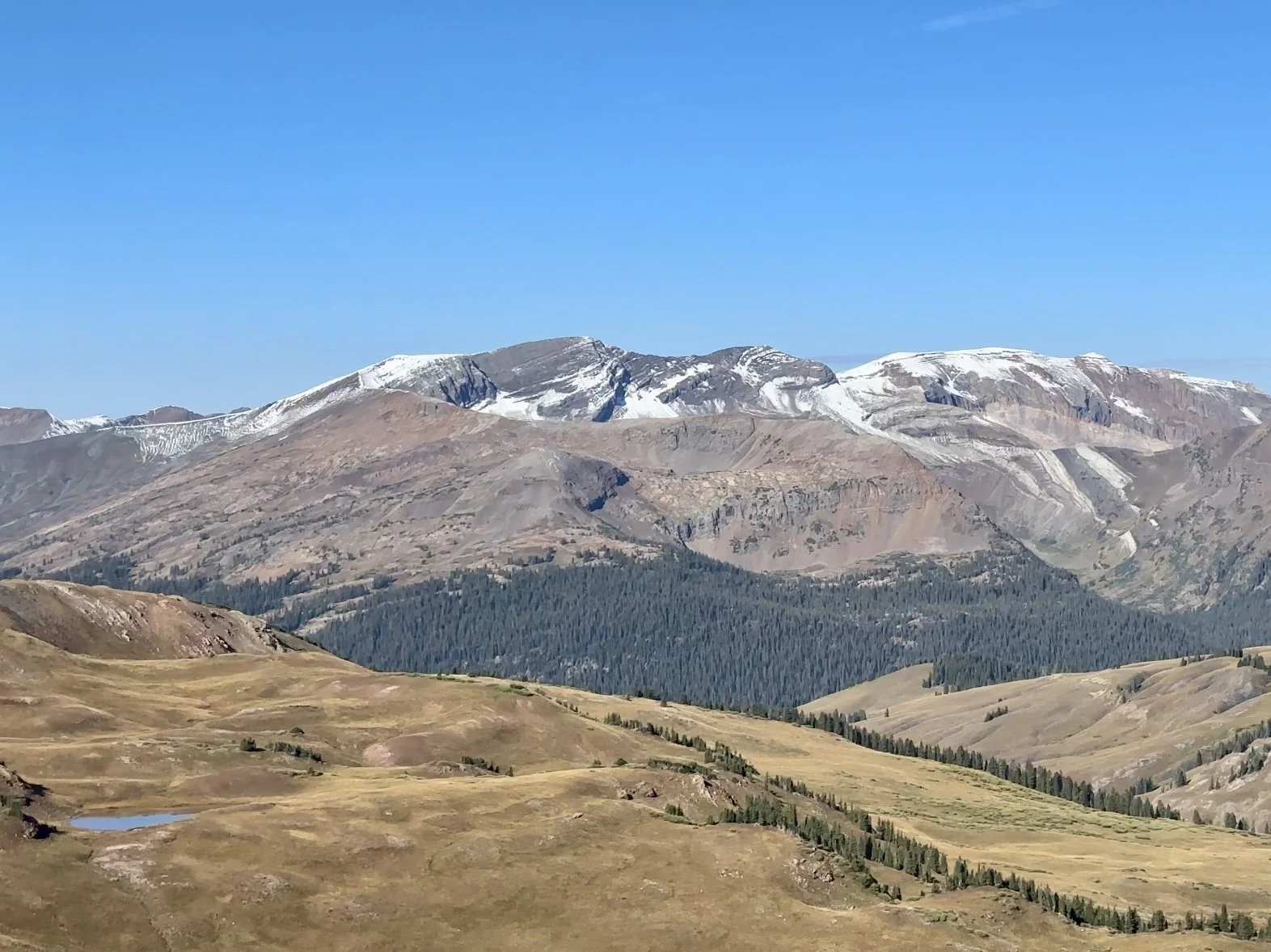
View from West Maroon Pass
Our next destination was Frigid Air Pass, our second pass of the day. After a quick but, you guessed it, muddy descent, we began a gradual climb toward the pass. However, the gradual climb became very steep near the top, turning into a literal staircase. Aptly named, Frigid Air Pass greeted us with cold wind and a view that looked straight out of a fantasy novel — the backside of the Maroon Bells and Fravert Basin below, with snow-capped peaks all around. Could this be the most scenic pass of the loop?
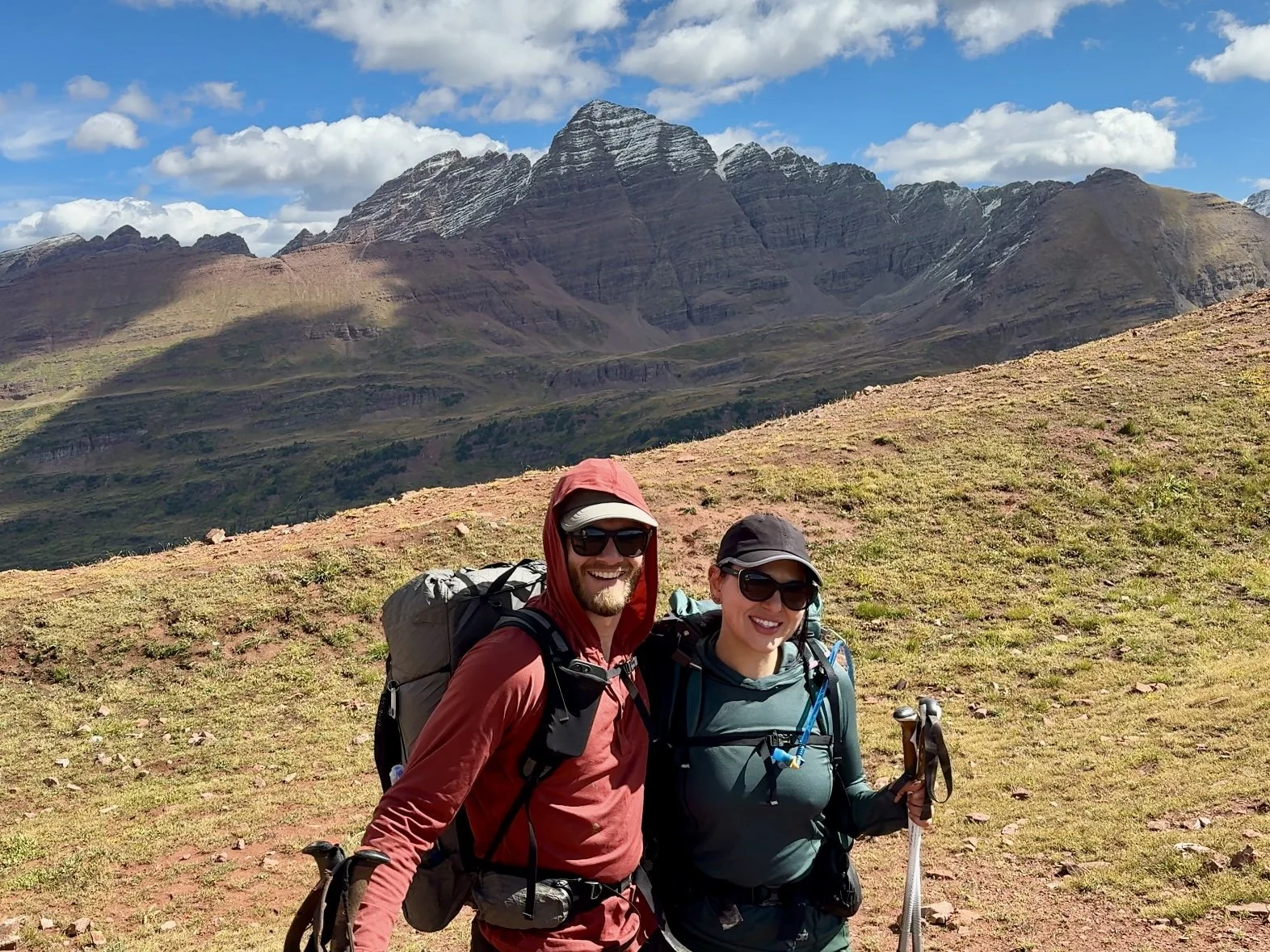
Here we are on top of Frigid Air Pass
From there, we dropped into Fravert Basin. This stretch of trail was a nice break from all the climbing, and the views surrounding us were incredible. Towering mountains surrounded us, waterfalls poured down the walls, and the trail meandered through open meadows. After some relatively mellow hiking, the trail made a quick descent, and opened up to a beautiful meadow with the North Fork Crystal River meandering through.
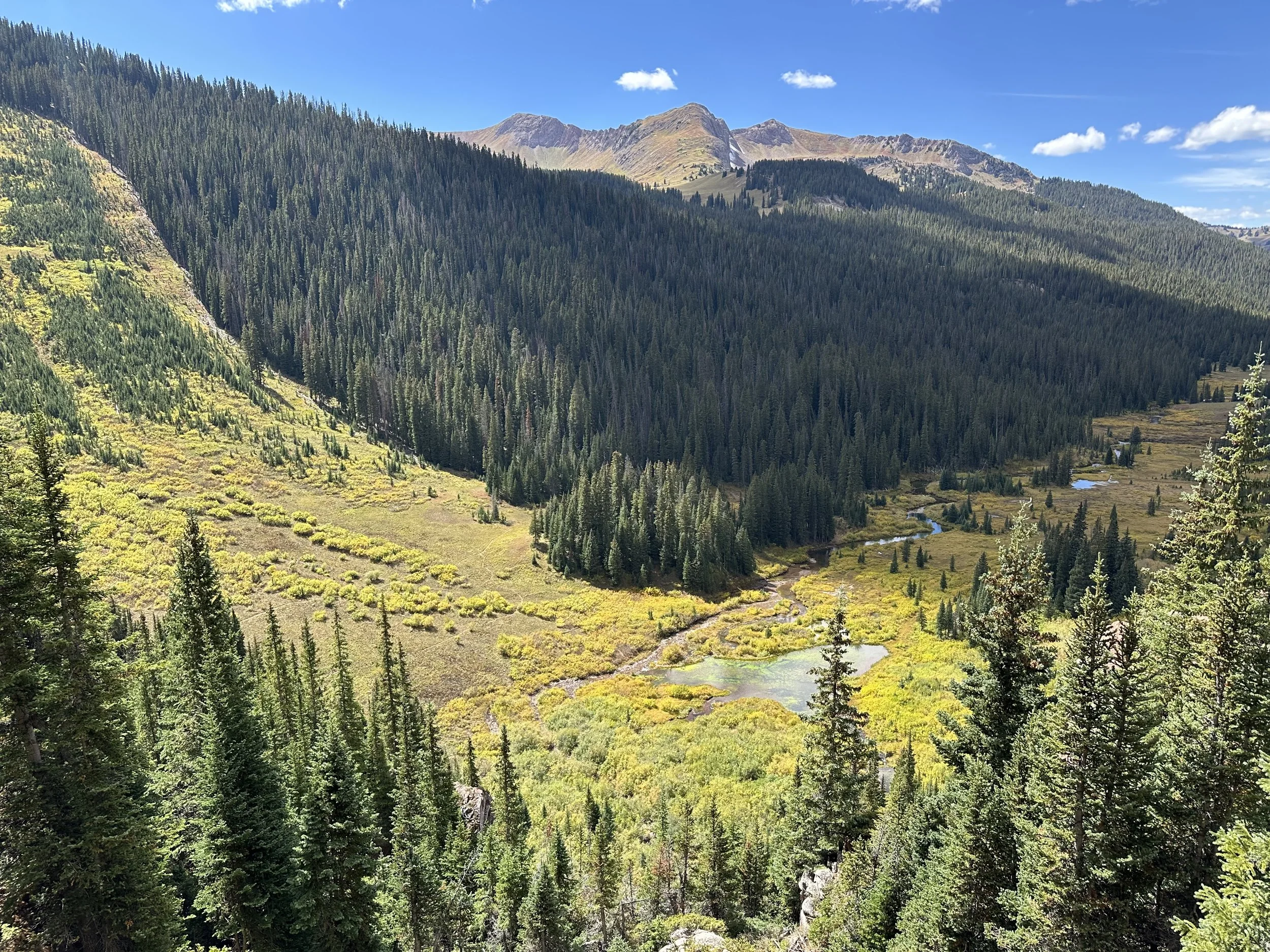
Beautiful valley with North Fork Crystal River meandering through
Then came the real test: Trail Rider Pass. We knew it would be hard, but nothing quite prepares you for a 2,000-foot climb at altitude after already hiking over two 12,000 foot passes and 10 miles. Every step burned, and our energy stores began dwindling, but the higher we climbed, the better the views became. Reaching the top and seeing Snowmass Lake shimmering far below made it all worth it.
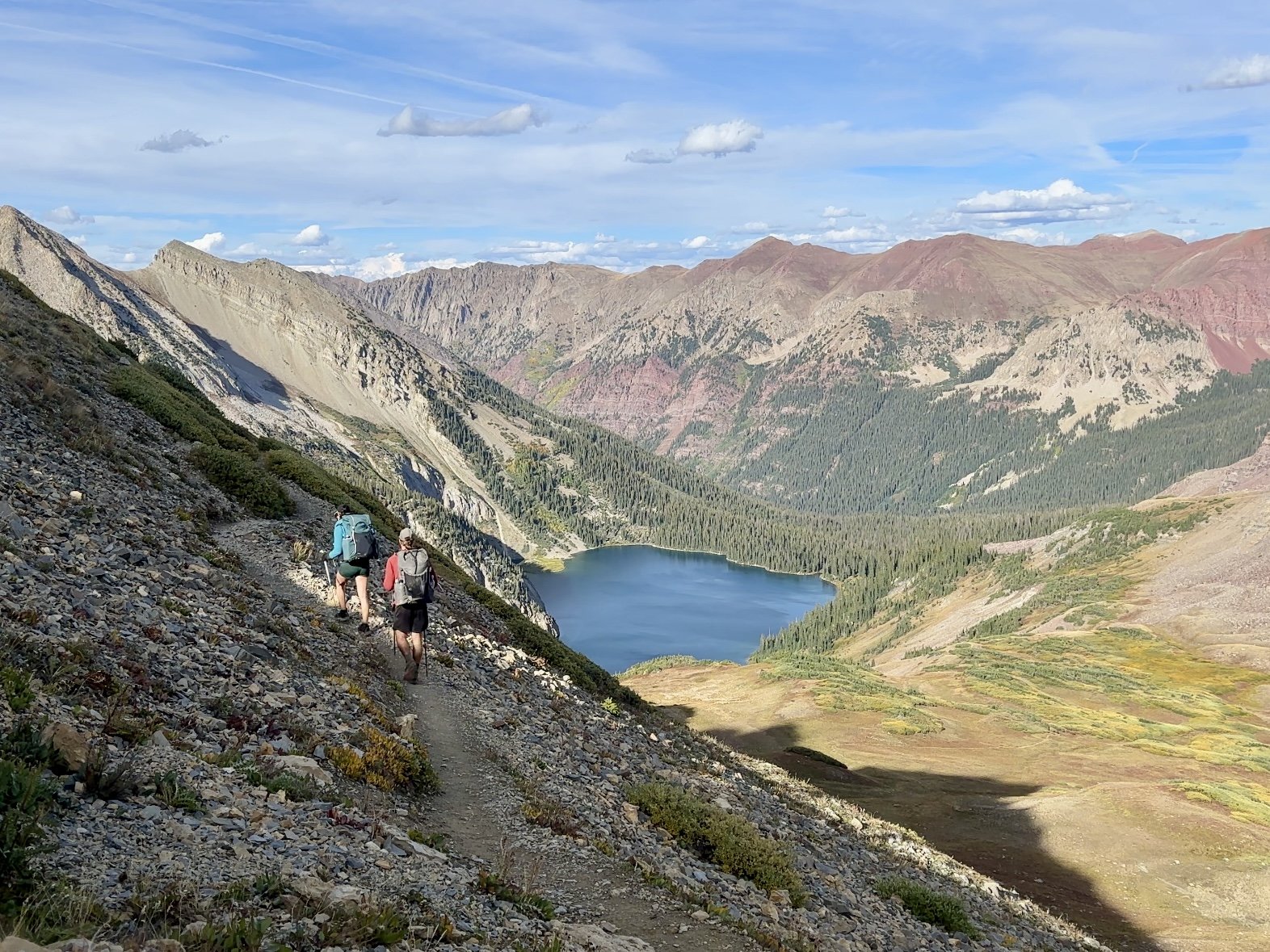
Descending from Trail Rider Pass to Snowmass Lake
The descent from Trail Rider Pass was an incredible relief after climbing over 4,000 feet throughout the day. After a 14.5-mile day (including a brief detour thanks to a washed-out section), we made it to camp at Snowmass Lake completely wiped out but completely in awe.
That night, sitting by the water as alpenglow lit the peaks, we agreed — per mile, this might be the most scenic trail we’ve ever done. It ranks right up there with the John Muir Trail and Wonderland Trail for sheer beauty… but it also might be hardest trail per mile.
Day 3: The Final Stretch – Buckskin Pass and Back to Maroon Lake (9 miles)
We woke up to perfect calm — no wind, clear skies, and the soft glow of sunrise reflecting on Snowmass Lake. It was the kind of morning that makes you forget sore legs and just breathe it all in.
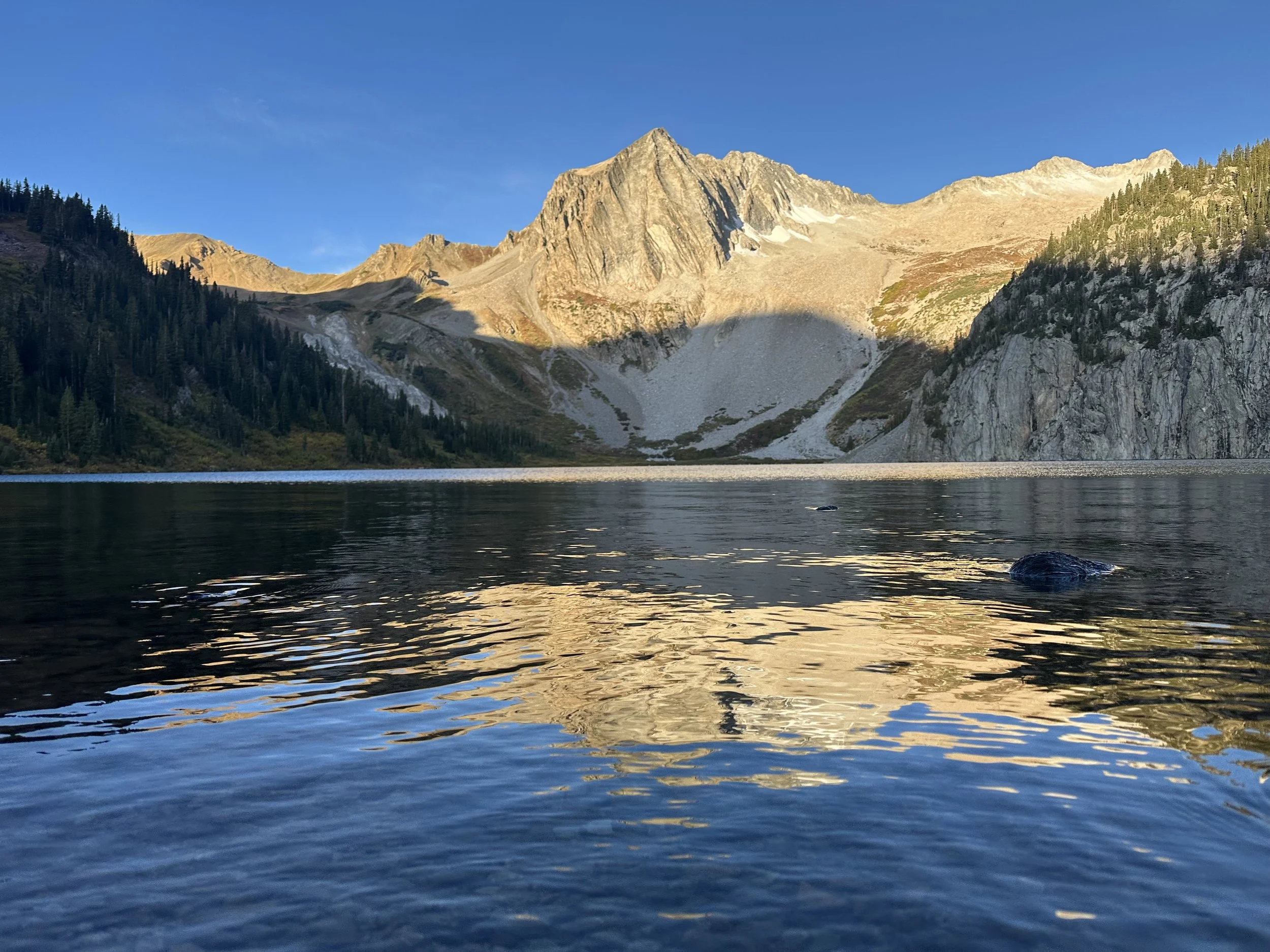
Snowmass Lake
Our last climb awaited: Buckskin Pass, the final of the four. After another quick breakfast and coffee, we began the final day of our backpacking trip. After a pleasant trail through the trees, we entered a beautiful meadow with the Maroon Bells showing off in the distance. Beautiful! As we neared the top of the pass a light snow began to fall — a fitting farewell from the mountains.
At the top, we were surrounded by dramatic peaks, deep valleys below, and a dusting of snow swirling in the wind. It was pure Colorado magic.
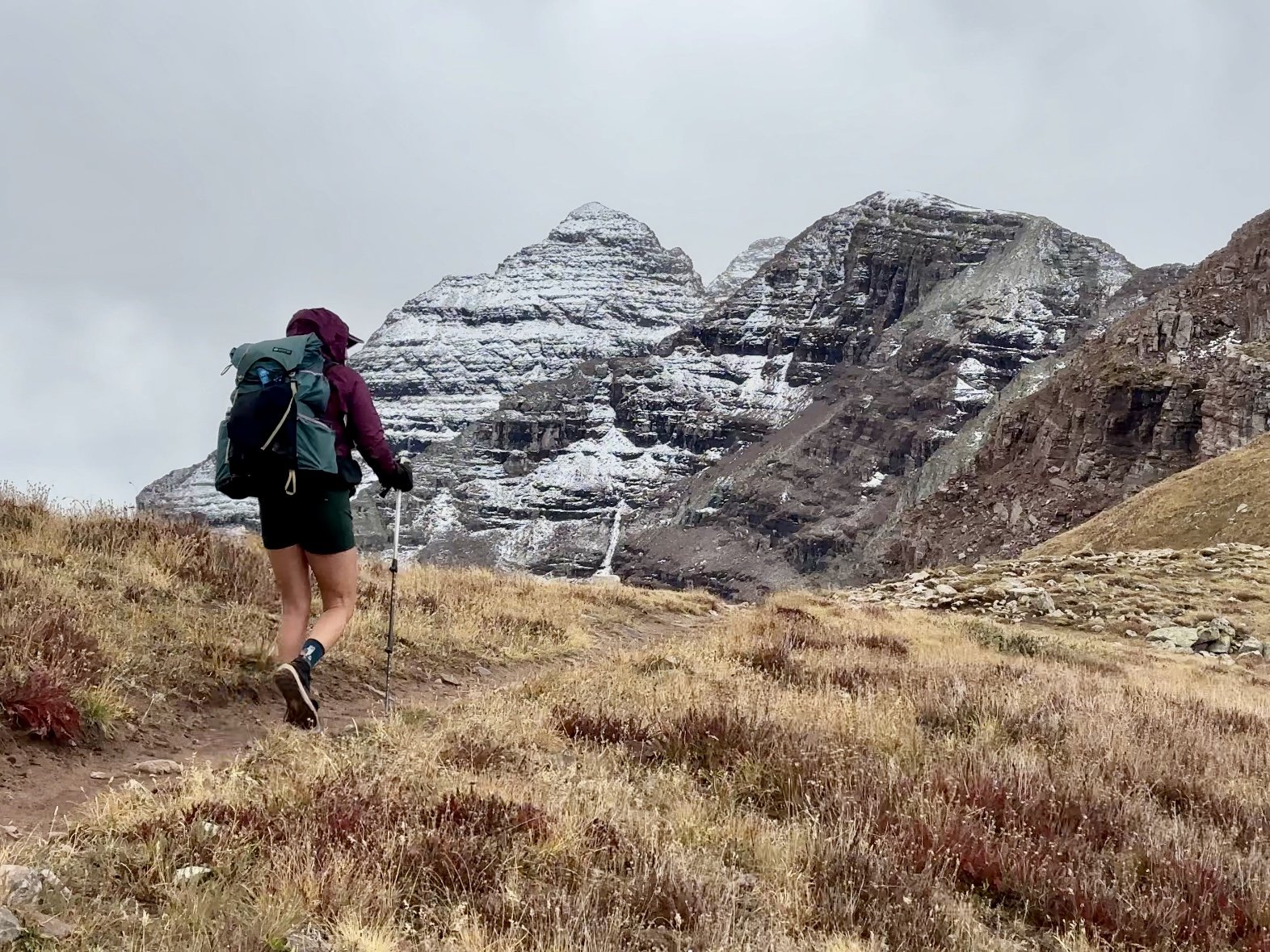
Anna on Buckskin Pass
From there, the trail back to Maroon Lake was bittersweet... and the descent was big! The descent from Buckskin Pass back to the trailhead is nearly 3,000 feet in 4.6 miles. It made us glad for choosing to go clockwise! As we began our climb down, the Maroon Bells were a picture perfect representation of the Rocky Mountains looming over us. The trail wound through aspen groves just beginning to turn gold, and every step brought the realization that this incredible journey was coming to an end.
The snow changed into a drizzle. When we finally reached the trailhead, muddy, tired, and grinning ear to ear, we both said the same thing:
“That was one of the hardest — and most beautiful — hikes we’ve ever done.”
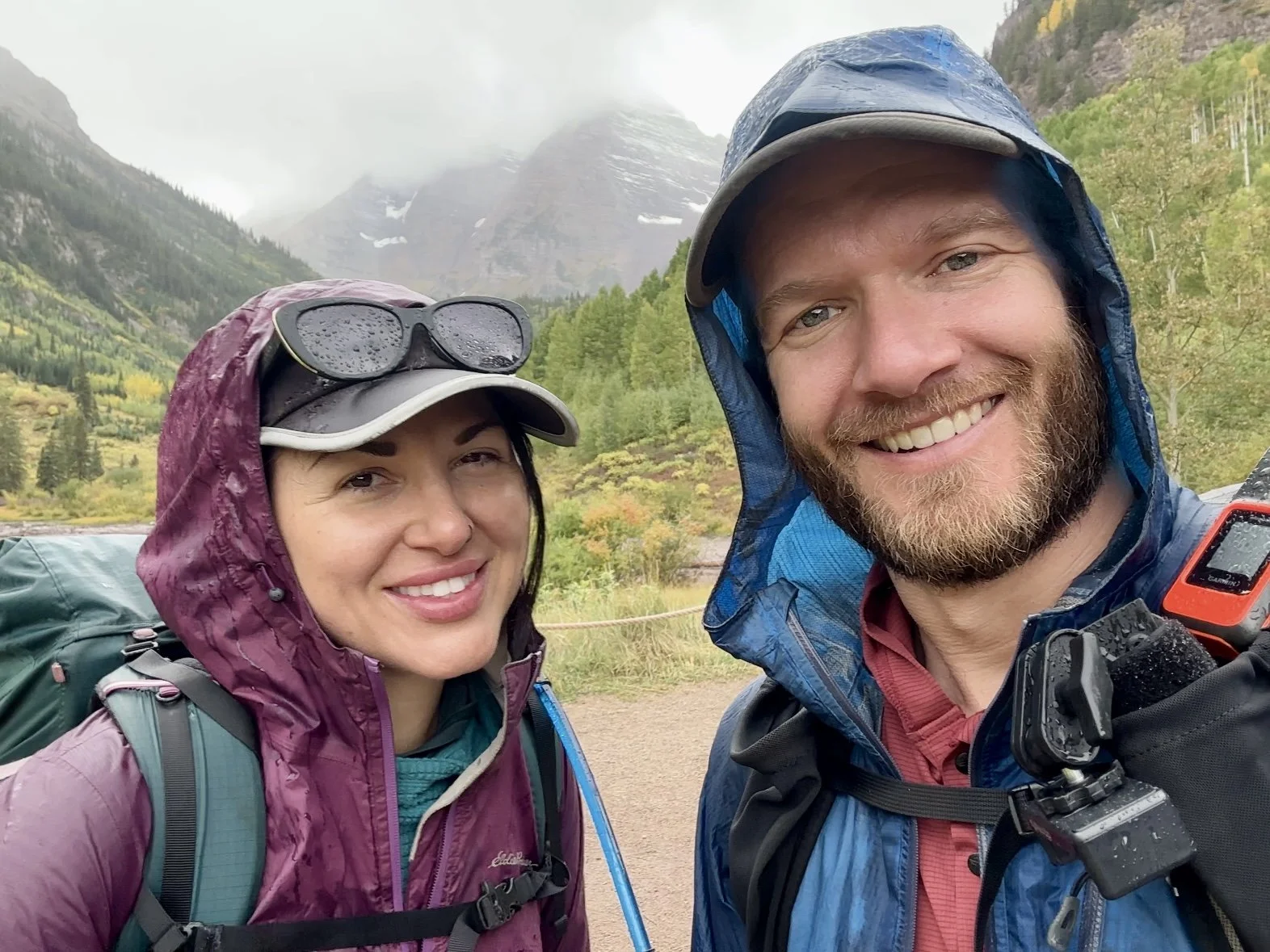
Finishing the Four Pass Loop with a drizzle
Reflections: Why You Should Do the Four Pass Loop
The Four Pass Loop isn’t an easy trail — it demands strong legs, endurance, and a willingness to embrace discomfort. But what it gives back is something few trails can match: four epic mountain passes, incredible alpine lakes, views for days, and the embodiment of the Colorado mountains, stitched together in one unforgettable loop.
If you’re considering it, this is your sign to start planning.
Here are a few takeaways and tips from our trip:
Permits Required: Overnight permits are now mandatory for the Four Pass Loop. They go fast, so plan early.
Bear-Resistant Food Storage: Required by law. We both used Ursacks, which worked great.
Expect All Weather: We had rain, snow, mud, and sunshine - sometimes all in the same day.
Go Clockwise: Personal preference, but we think the climbs are slightly more gradual, and the views descending from Buckskin are incredible.
Best Time to Go: Anytime July through September would work. Early to mid-September offers fall colors, fewer crowds, and cool nights. You may miss the early summer wildflowers, but you don’t have to worry about monsoons.
Train Beforehand: With 8,000 feet of gain in less than 27 miles, it’s a serious test of fitness and mental grit.
Final Thoughts
The Four Pass Loop gave us everything we look for in a backpacking trip — challenge, beauty, and a sense of perspective that only comes from standing high in the mountains.
It’s the kind of hike that humbles you, recharges you, and reminds you why you fell in love with wild places in the first place.
If you’ve ever dreamed about hiking it, start planning — you won’t regret it.
🎥 Watch our full YouTube video from the trip here:
Until next time — see you out on the trail.
– Justin & Anna
